

When planning out your show day, the most common oversight is underestimating the time it takes for load in / sound checks and changeovers (transitions between artists during a show).
Event schedules work best when we’re realistic, not hopeful. Building out your schedule with adequate timing can help save you the stress of having to cut an artist’s set short, running over your curfew, or having to rework the schedule in the middle of your event. Give your team, production company, and your artists the best shot at a smooth day with these general tips.
Production Set Up
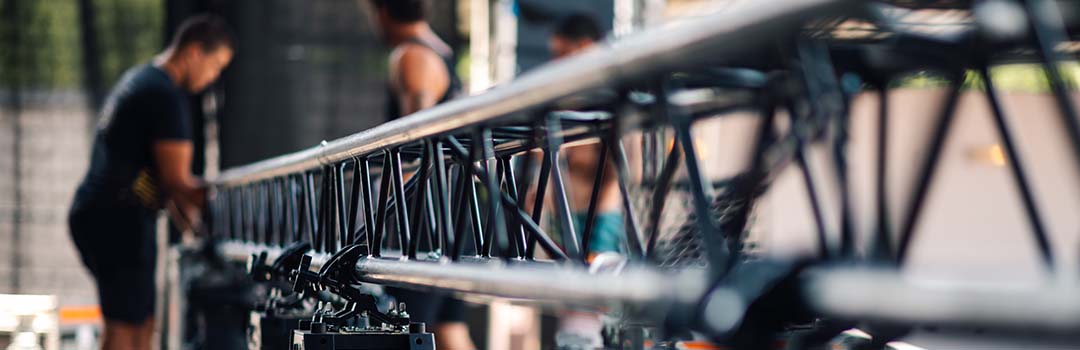
Stage, sound, and lighting take time to set up. Most production companies require at least 4 hours of set up time if they are providing everything for production. ALWAYS connect with your production company and ask how much time they need to set up, and make them aware of any noise ordinances or timing restrictions on when they can make sound. Once all set up, they often make noise by running the audio a bit, so you’ll want to be clear about those restrictions and give them time to fine tune everything before artists arrive.
Load ins / Soundchecks
When dealing with hip-hop artists, EDM artists, or generally any solo artist or one that performs to tracks or a DJ backing them can usually load in and sound check in 30 minutes. Some may need additional time if they work from IEMs (in-ear monitors) because setting up that system and syncing everything can take time. Always ask how much time an artist prefers before assuming or scheduling.
When working with bands, whether local or national, you are going to need much more time. Bands usually ask for 90 minutes all the way up to 5 or more hours of time for load in and sound check. Timing can vary because bands have many connections to configure, cords to run, and inputs to test to make sure everything is working properly. While solo artists typically need two audio channels (i.e. vocal mic and a direct input for a guitar), it’s not uncommon for full bands to have 20+ audio channels to connect and test. Soundchecks just take time, especially if they run into a challenge and have to troubleshoot. This is why it’s very important to communicate with your artist and your production company. Load in and soundcheck needs will depend on what the artist is carrying with them and will need to set up when they arrive, and what the production company has brought in and already set up for them ahead of time. An artist on tour that is carrying their own equipment will naturally need a lot more time than one that arrives with everything pre-set for them.
Also keep in mind that you want to sound check your headliner first, and then build any opener set ups in front of them, so your load in and sound check schedule should be opposite of your run of show. The last artist to sound check should be the first to perform. This also ensures that your headliner (and/or likely your most complicated or important set up) gets the time they need.
Tech Break
Production workers are often mistaken as robots, in that they don’t need breaks for meals, using the bathroom, and taking a rest. Please try to schedule in 60 minutes of “tech break” time between sound checks and show time in order to let production take a break. Not only does this give you a bit of breathing room if something happens to run behind during your sound checks, but also ensures production gets a moment to take care of basic needs. If you are providing meals, water, and nearby restrooms that helps greatly reduce the pressure on tech teams to have to figure out those details if the schedule is running behind.
Changeovers
When it comes to your actual run of show, here are some general guidelines for how much time to allot for changeovers (transitions between artists):
- Hip-hop / track / solo artist to another Hip-hop / track / solo: 10-15 minute changeovers (can happen even more quickly than that too)
- Band to hip-hop / track / solo or hip-hop / track / solo to band: 15-20 minute changeover
- Full band to full band: 20-30 minutes minimum. Bigger bands often propose a timeline if they need 25-30 minutes (usually because they’re switching consoles between acts and need time to fully check all lines).
The Math Isn’t Mathing
What do you do if you’ve unintentionally backed yourself into an impossible timeline? You or your middle agent should call your production company. They can often get creative and find ways to shave off changeover time or load in / sound check time.
Load ins / soundchecks can sometimes be shortened to a quick “throw and go” or “plug-n-play” scenario where the band members just hook up and sound check as they begin their set for the audience. It’s not ideal, but local artists or long festival line ups often have to go that route. Be sure to discuss whether that’s okay with them before you finalize.
Changeovers can be reduced if bands are sharing backline (instruments like drum kit and amps).
A designated stage manager can also be a helpful team member that ensures artists are hitting stage and doing changeovers on time. More on that here.
Ultimately, be sure to run the proposed schedule past all artist teams and your production company to make sure everyone feels they can make it work.
If you run into a big problem, sometimes you can shorten opener sets in order to finish your show before curfew. While cutting sets is never ideal, you’ll likely want to cut sets earlier in the night, as those are likely the artists you are paying the least amount for. You don’t want to cut your headliner short because you ran out of time later; this would disappoint your audience and prevent you from getting the most out of your event. If you run short on time, be clear with your headliner if they are allowed to go a certain number of minutes over curfew so they know whether to finish their set. You never want to cut off an artist without warning, so be clear about curfew and hard cut-offs.

Ultimately, if you work with a middle agent, they will help you schedule. Lean on them and your production company early in the process when you are booking artists so that you don’t overbook your day. Set yourself up for scheduling success. If you don’t have a middle agent, let’s connect!

Jolene Chevalier
Founder & Talent Buyer | How To Concerts
Jolene has been a middle buyer for over 15 years, helping colleges and others with their concerts, comedians, and speakers. (And, yes, she is named after the Dolly Parton song.) She would love to talk with you about helping to book, plan, and prepare for your event.
Jolene Chevalier
Founder & Talent Buyer | How To Concerts
Jolene has been a middle buyer for over 15 years, helping colleges and others with their concerts, comedians, and speakers. (And, yes, she is named after the Dolly Parton song.) She would love to talk with you about helping to book, plan, and prepare for your event.
 Freebie Alert!